
Kindred
A fan app, an artist studio, and the system behind them, built so fans can pay artists directly.
Kindred lets fans pay the artists they love directly, through a phone app for listening, a web studio for artists, and the system behind both. The parts that took the most thought were taking payment, deciding who gets to hear what, and making a music player feel right under a thumb.
- Origin
- Studio product
- Platforms
- iOS, Android, Web
- What people open
- Fan app, Artist Studio, public pages
- Role
- I designed it and I built it
- On this project
- Expo · Next.js · Convex · RevenueCat
Why it matters
Money and access have to be right.
When money and access are tied together, mistakes get expensive. A wrong payment means an artist isn't paid properly, and a leaked exclusive takes away the reason to support them. So Kindred itself checks who has paid and who may listen, not the phone, which means those rules can't be got around.
Where it started
A big audience is not the same as a living.
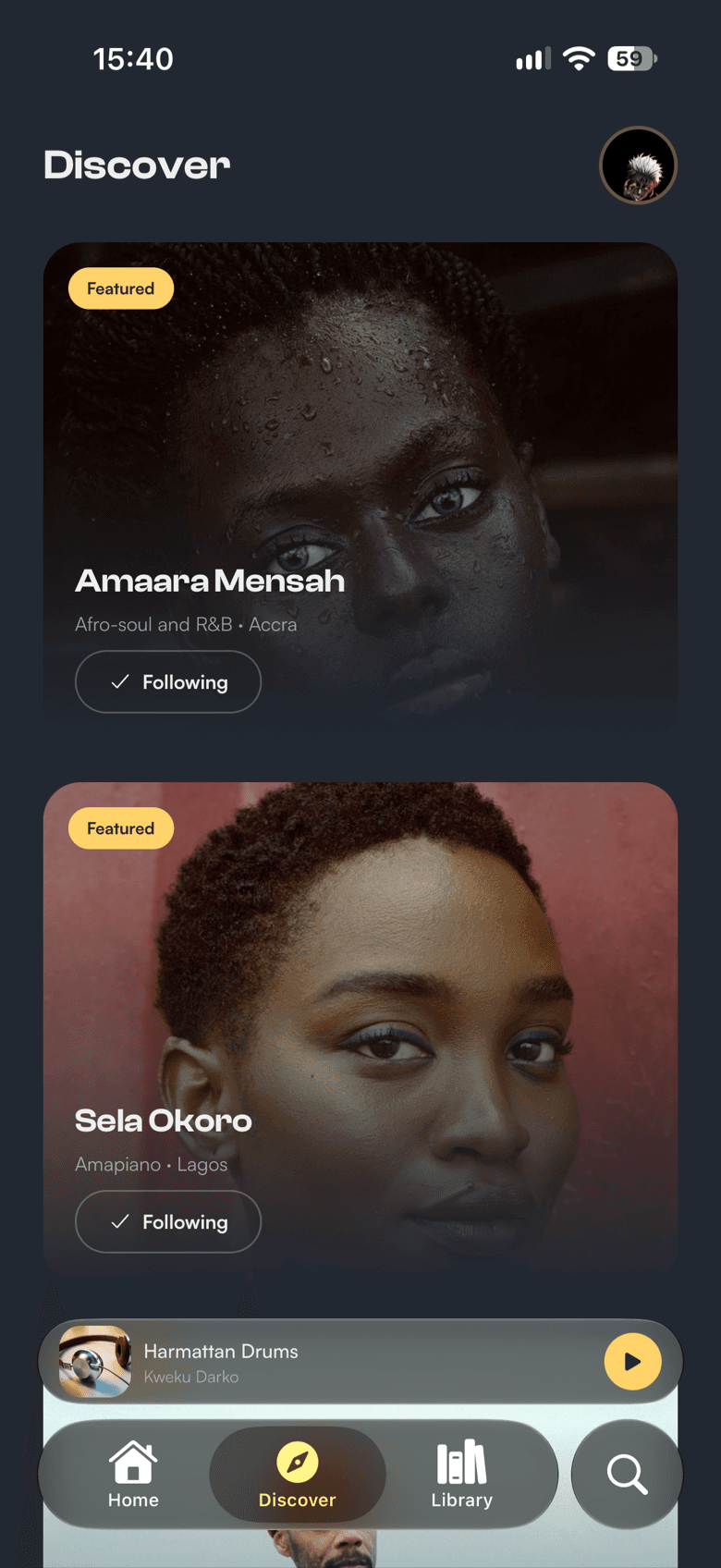
On streaming, an artist can build an audience of thousands and still take home very little, while the fans who care most have no good way to back one person month after month. The problem I set out to solve was a direct line between the two, in the form of a subscription where each listener chooses which artists get their share.
It is a familiar shape of problem for many businesses, where money comes in from one group, is shared out to another, and what people can see depends on who has paid. This is what it took to build.
What I built
Two apps working from the same information, and a lot of moving parts.
- 01
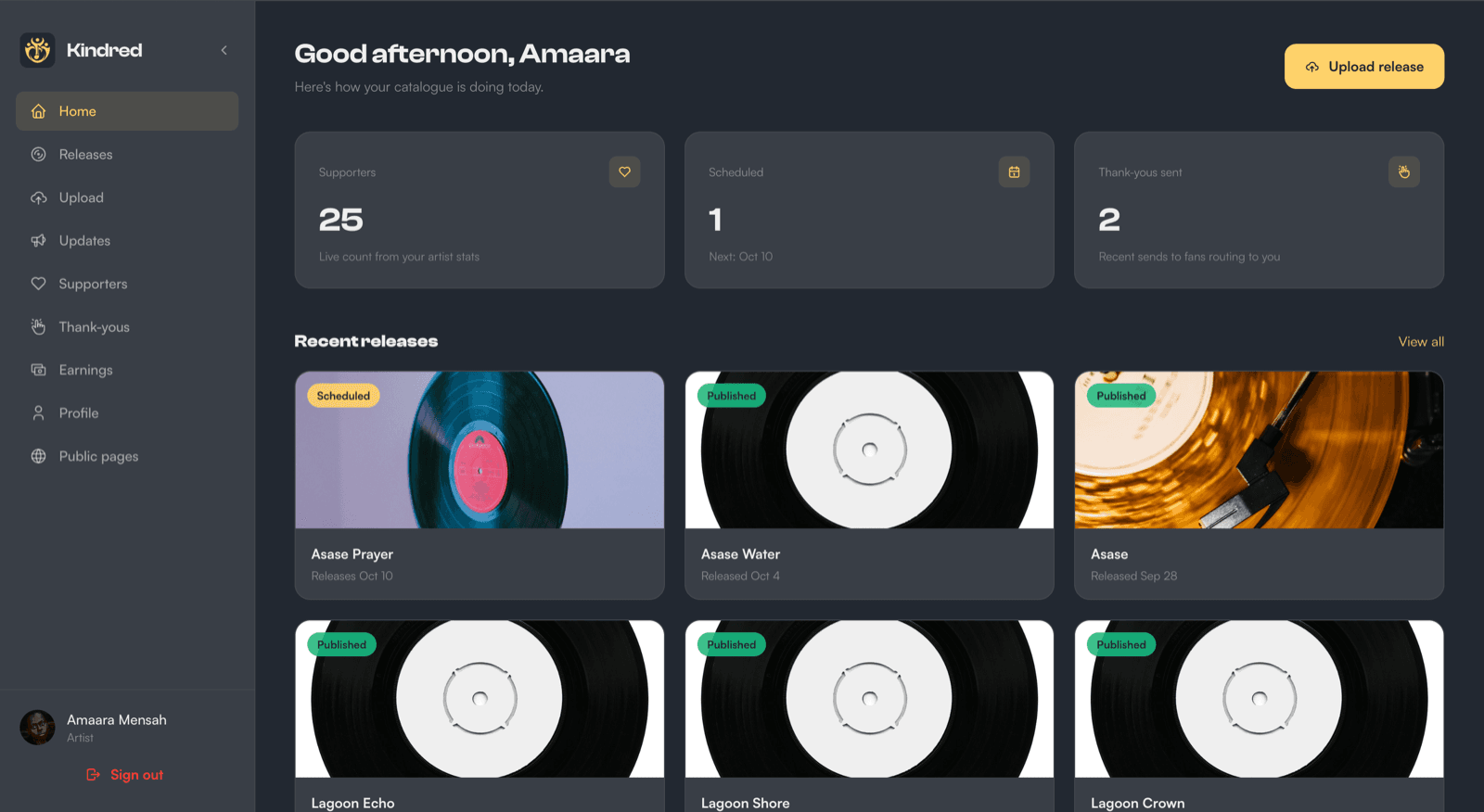
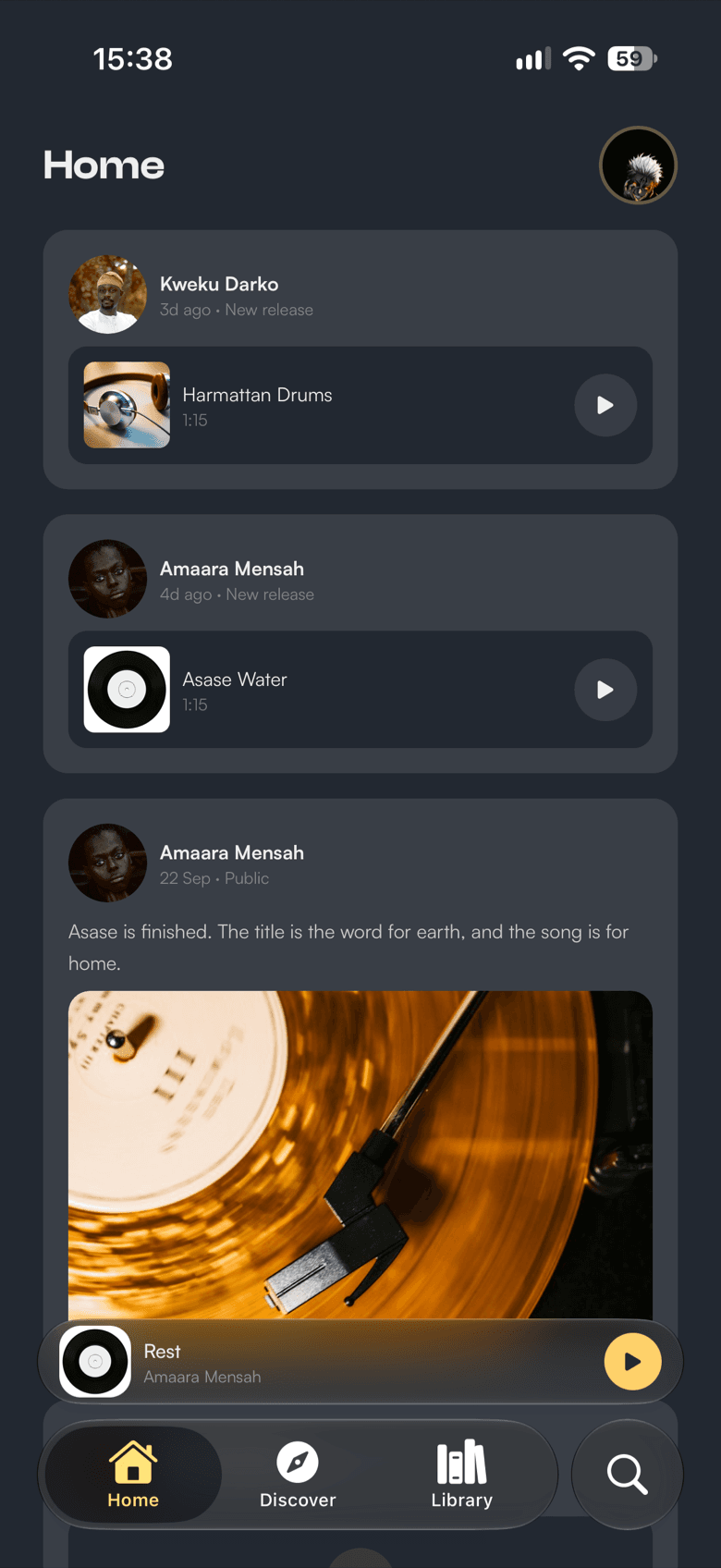
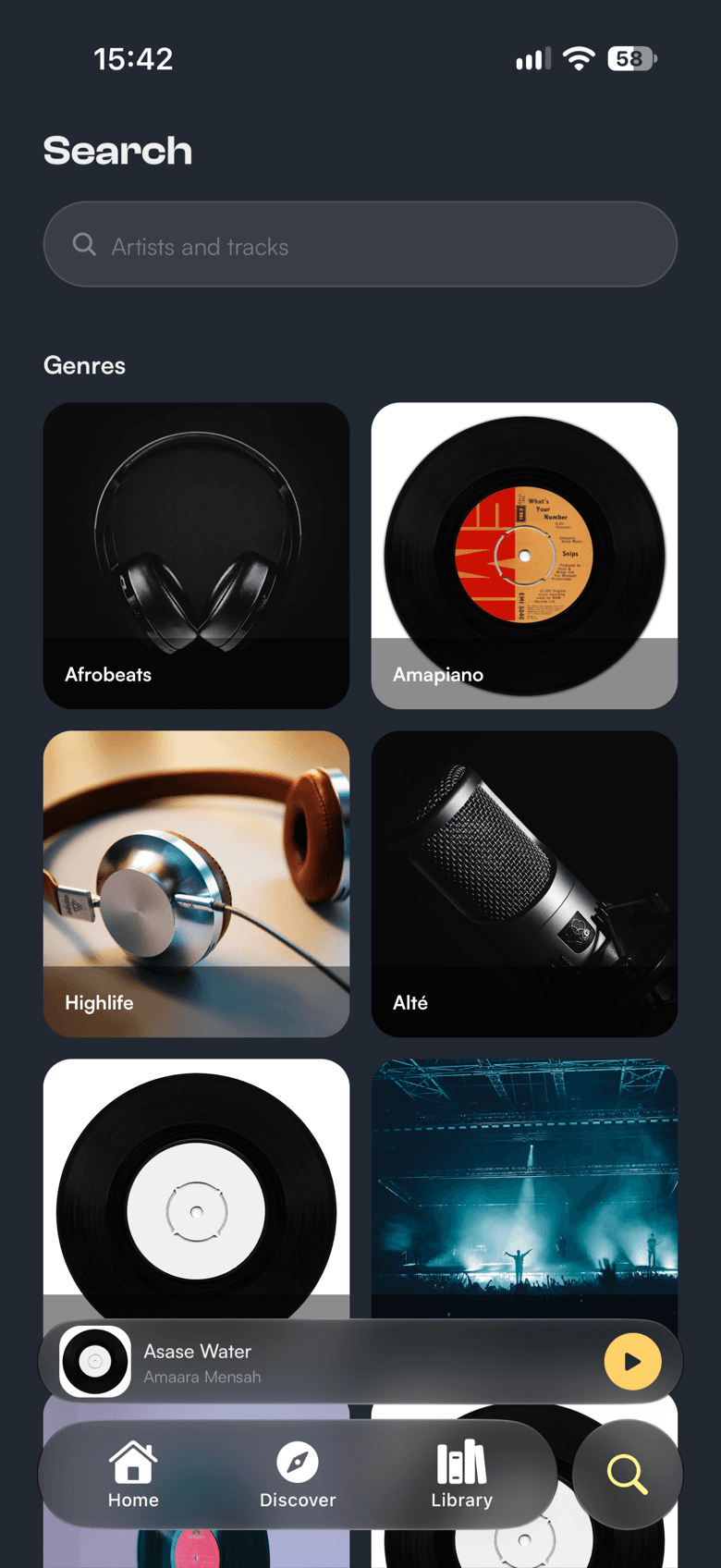
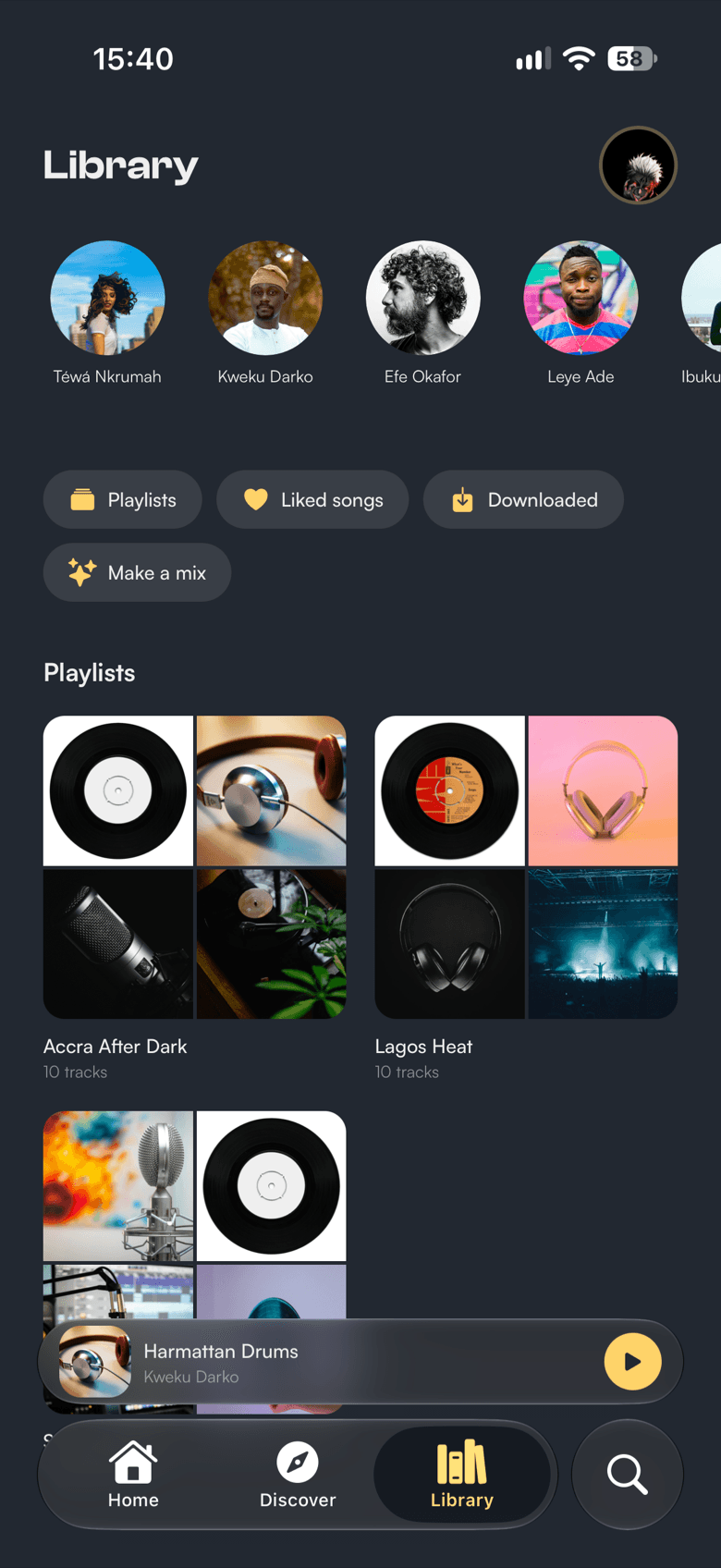
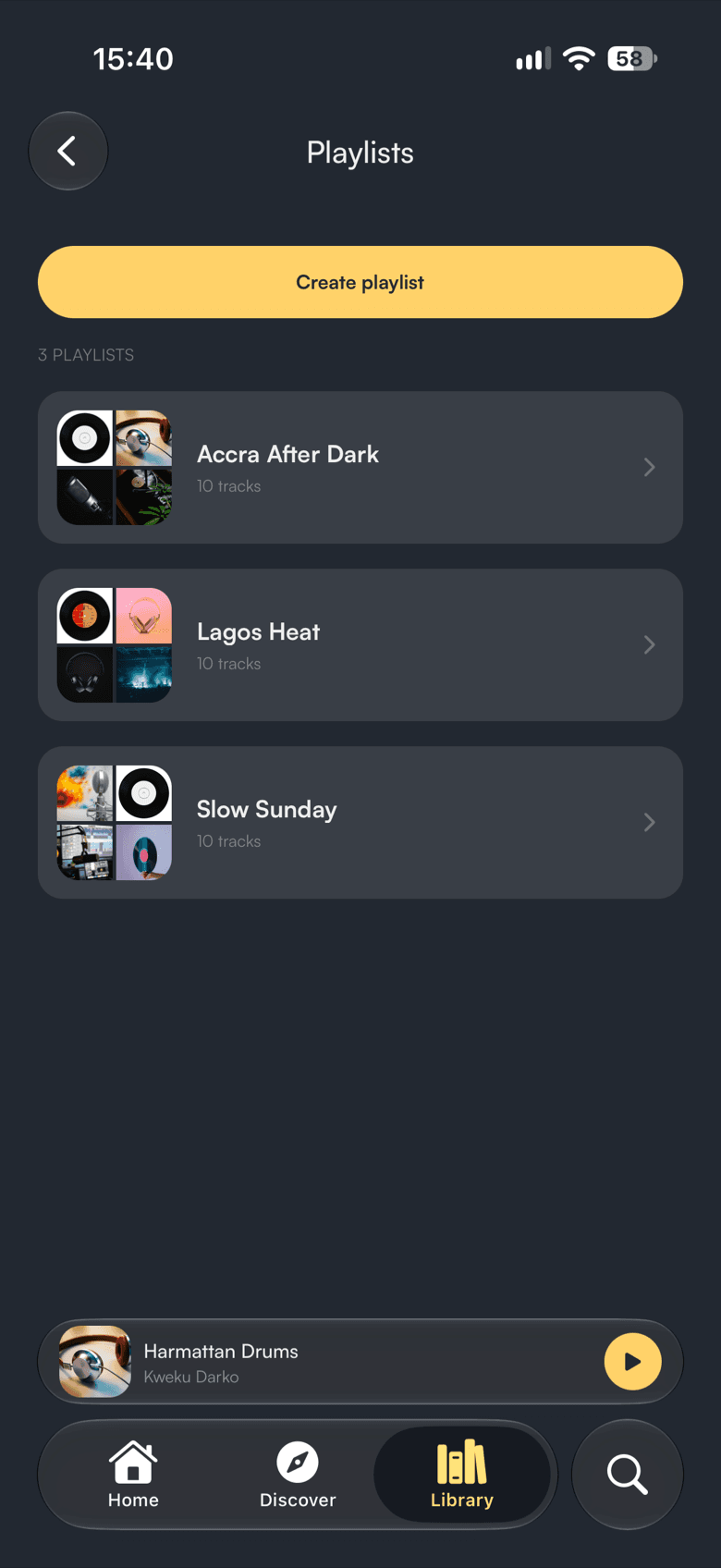
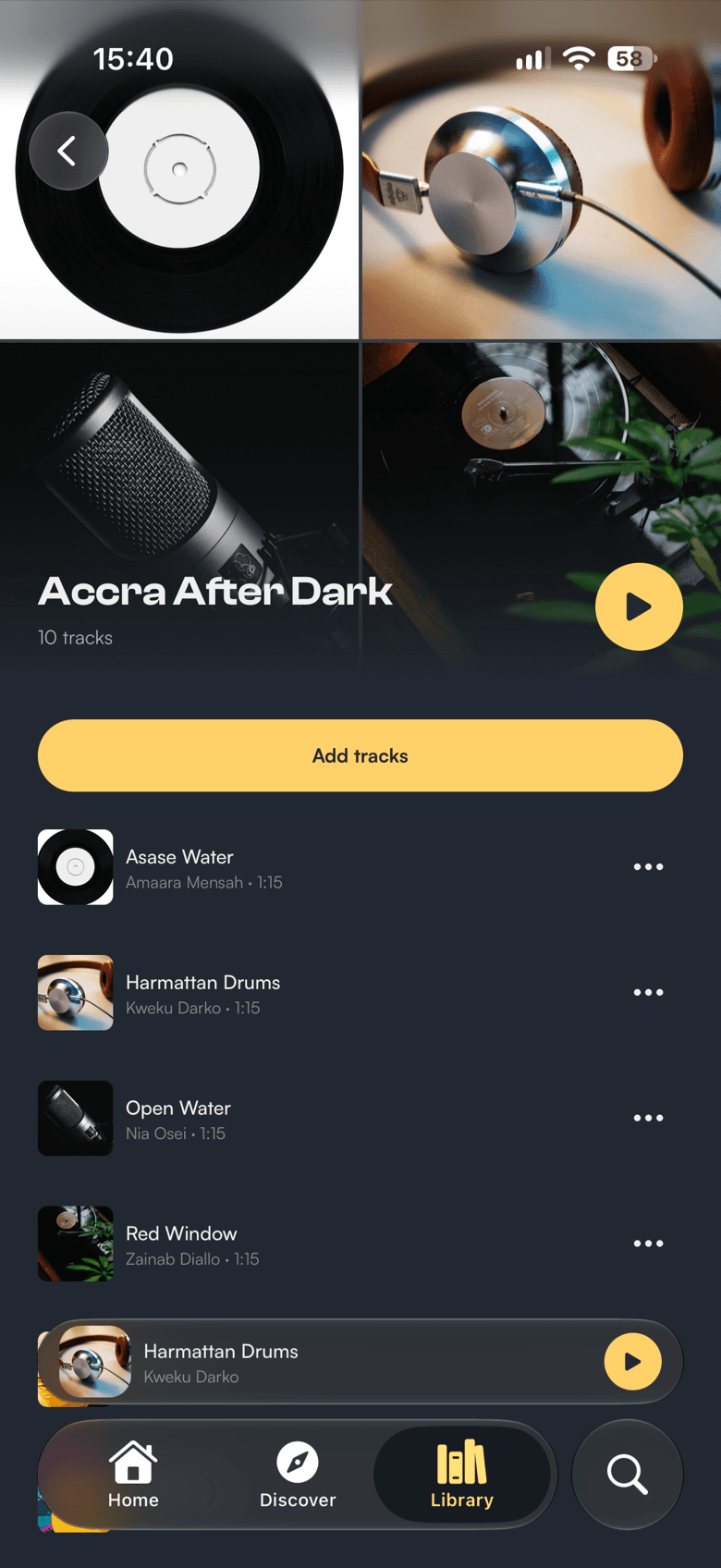
The fan app on the phone, with discovery, search, a library, playlists, a play-next list, music that keeps playing when you switch to another app, and a now-playing screen.
- 02
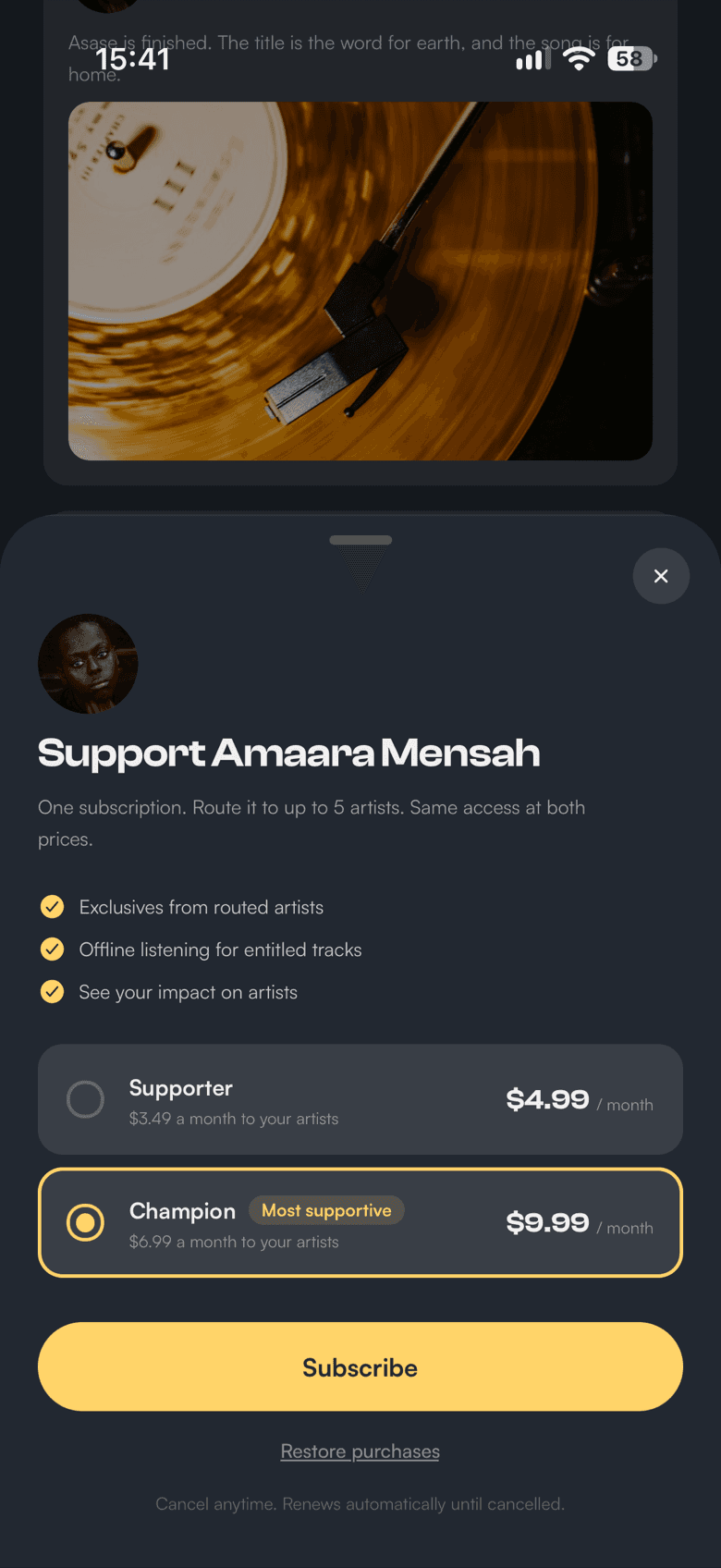
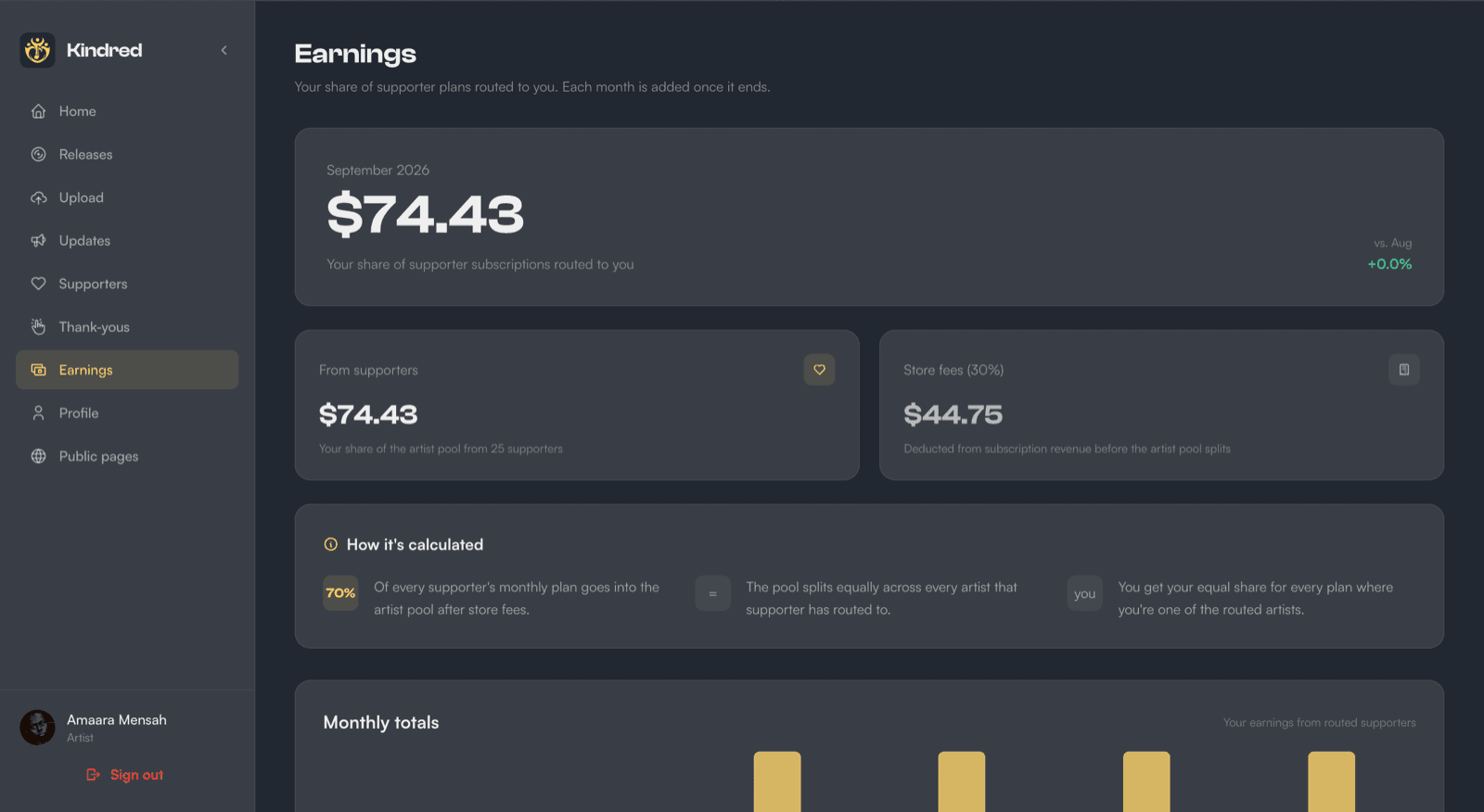
Supporter plans at $4.99 or $9.99 a month. The money is split equally across up to five artists the supporter follows, and they can change who is in that group whenever they like. Purchases and restore run through the app store's practice mode.
- 03
Exclusive tracks that only open for people funding that artist. Kindred's own system checks before it sends the song, so the lock can't be skipped by poking at the app.
- 04
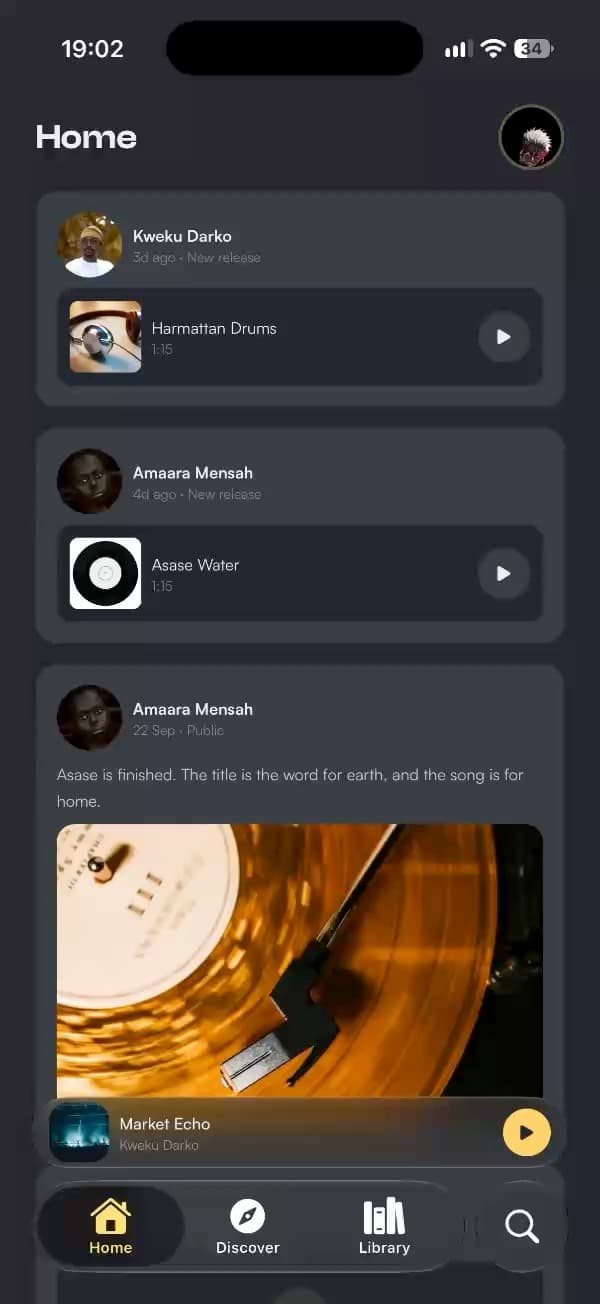
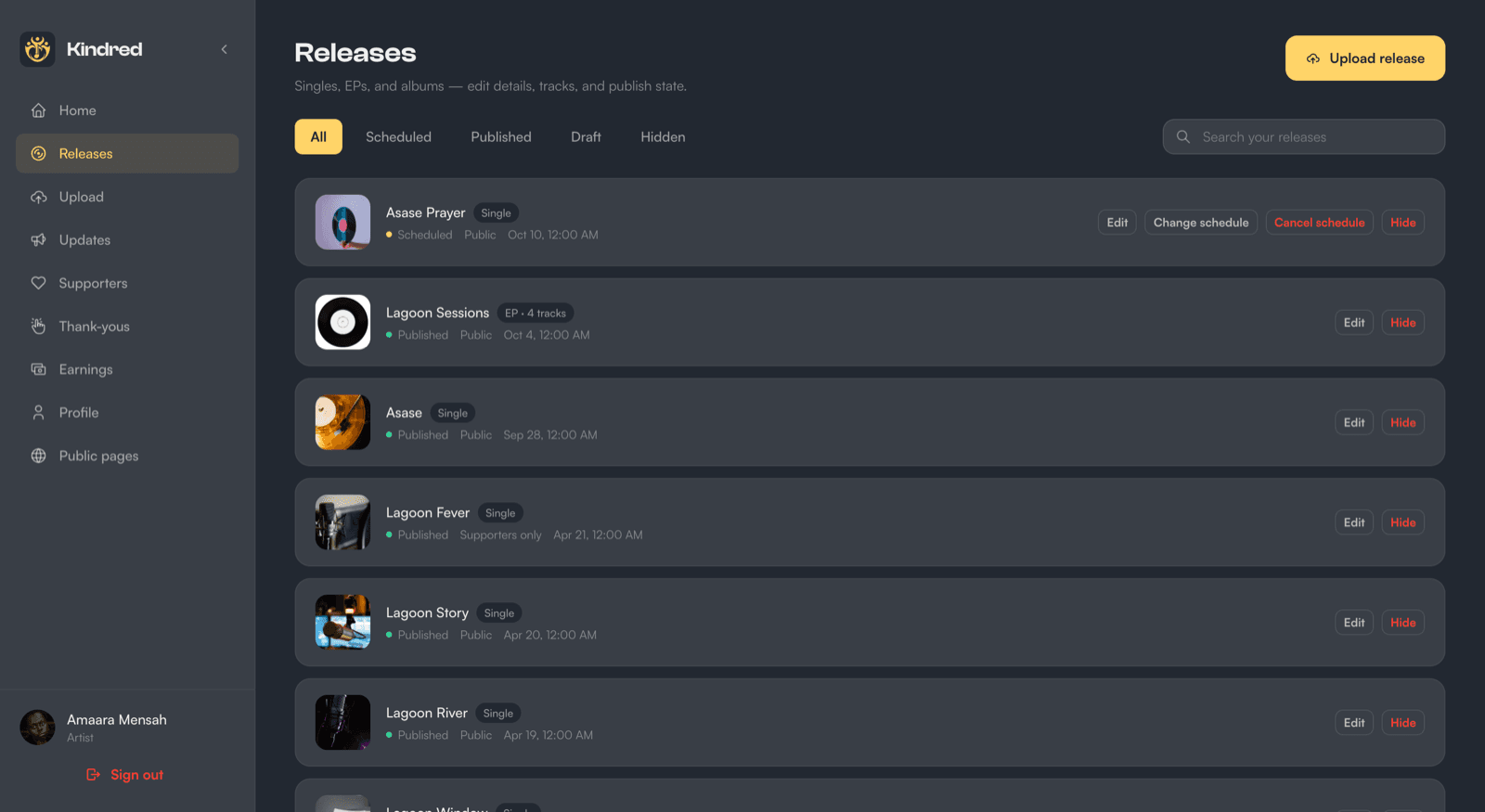
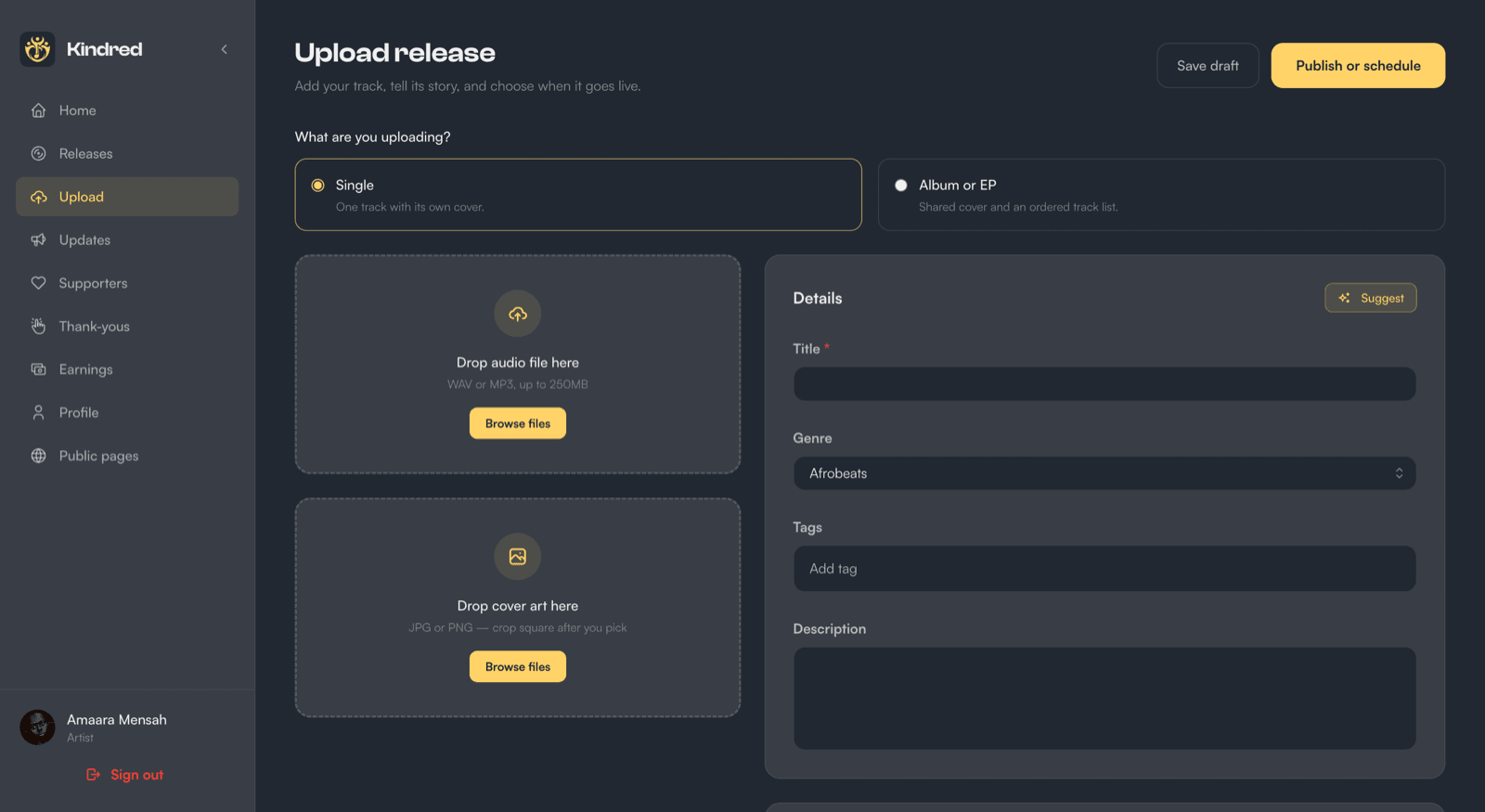
The Artist Studio on the web, where artists upload audio and artwork, schedule releases, post updates, see who supports them, and draft thank-yous. The earnings page shows sample figures.
- 05
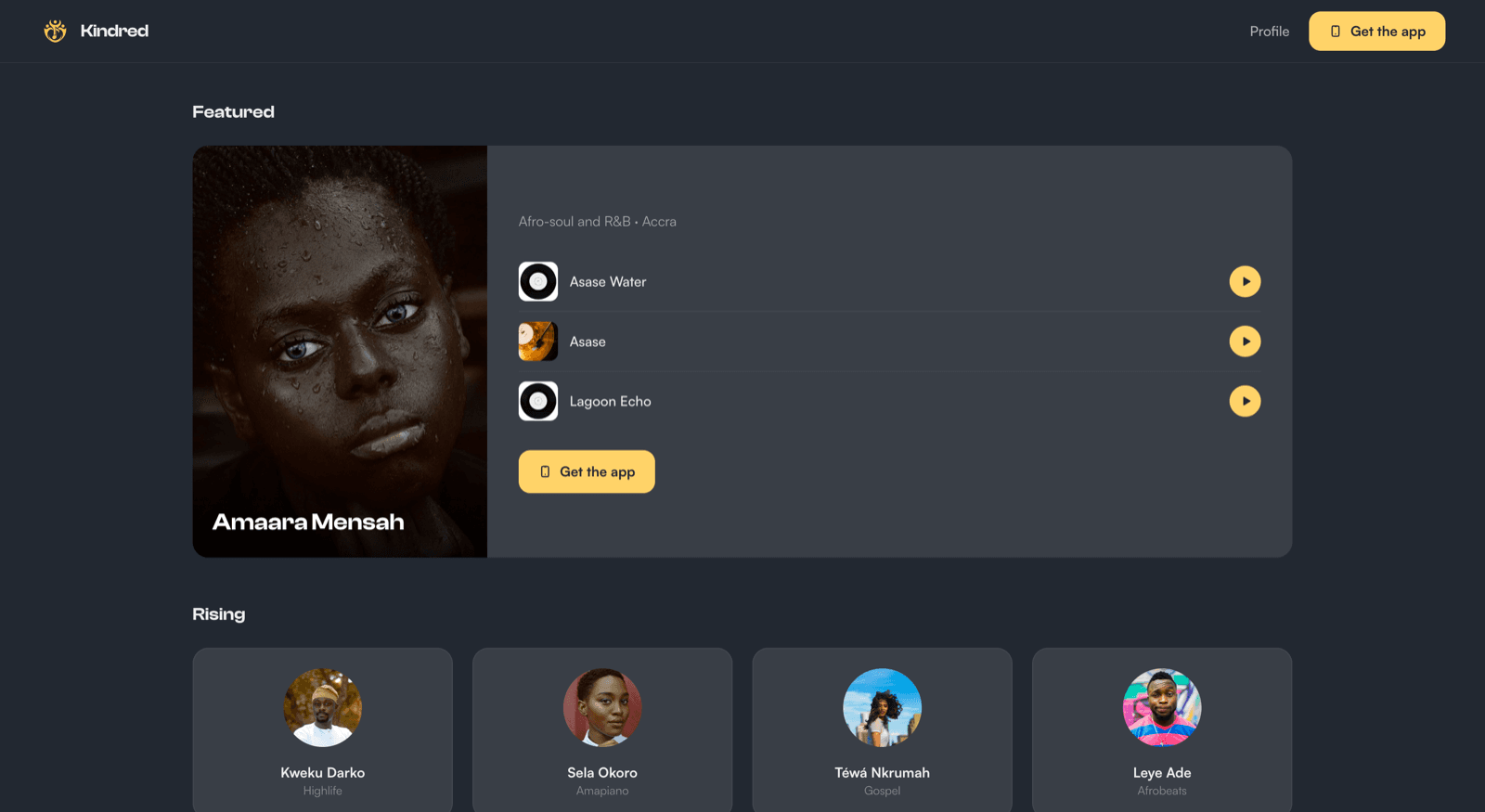
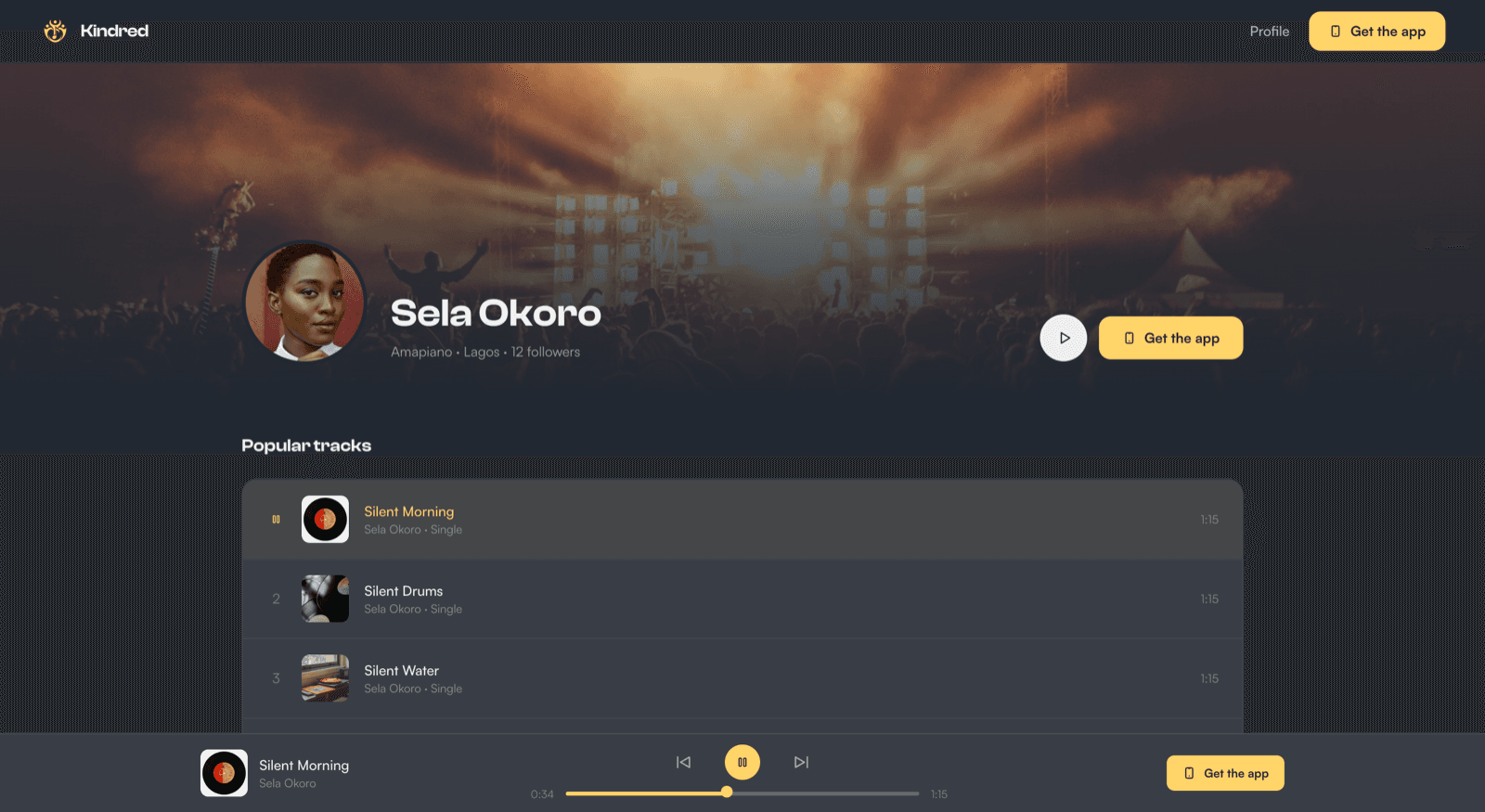
Public artist, track, and mix pages that play public audio in the browser and point people to the app for the rest.
Artist Studio
The catalogue, the upload, and the money.
In the build
The hard parts.
A player that grows, never jumps
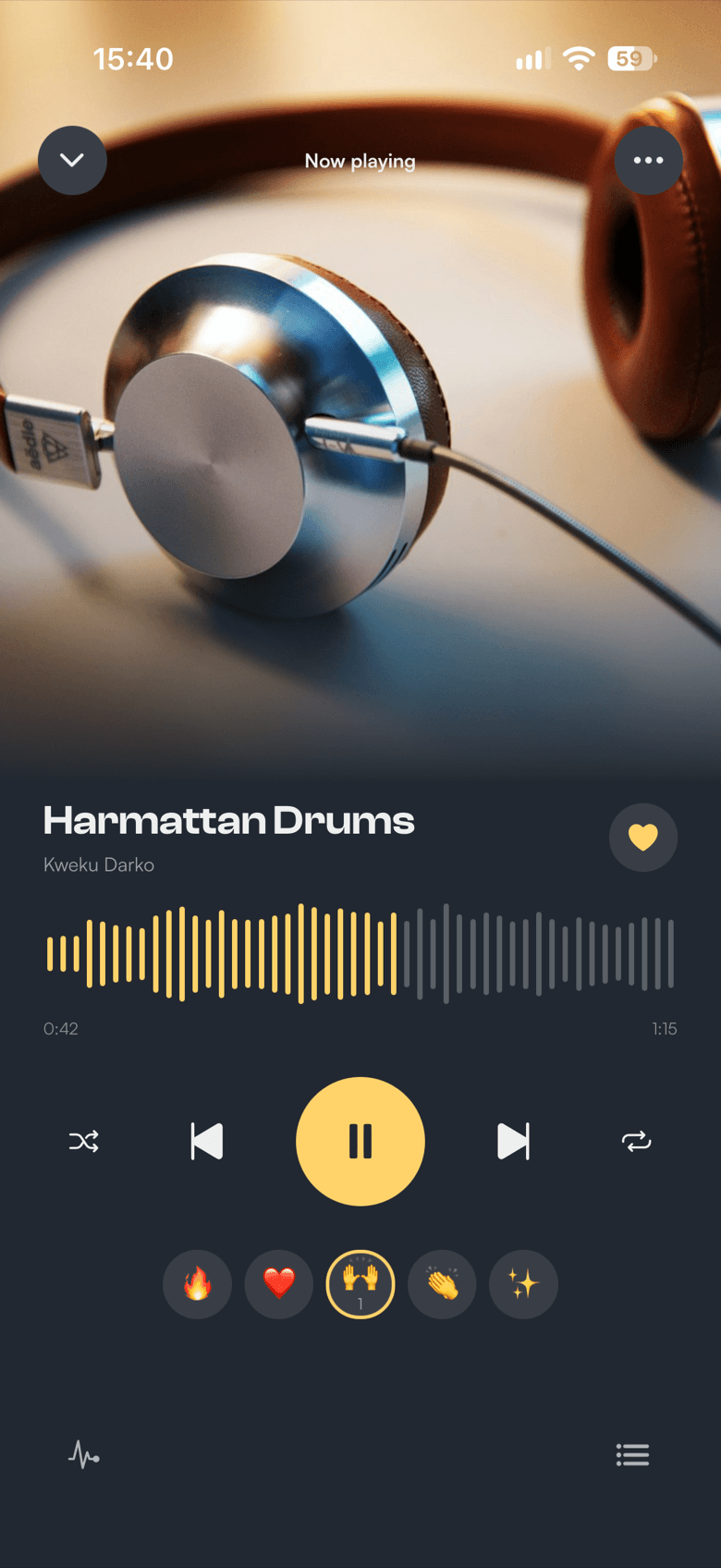
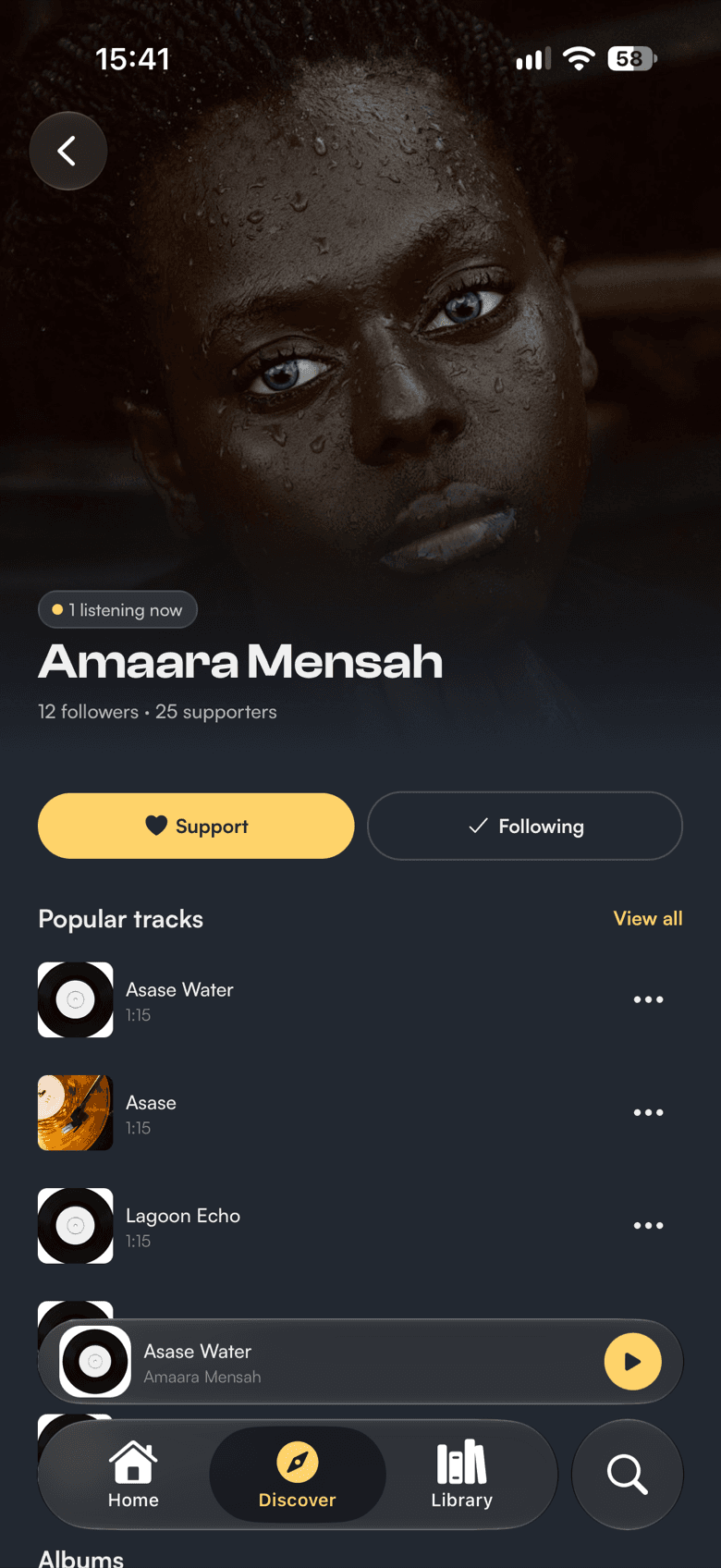
The bar at the bottom of the screen expands into the full now-playing screen as one continuous movement, so you can catch it halfway and drag it back down. It took care to make the two feel like the same thing instead of two screens swapping places.
Drag the sound wave to skip around
The wave under each track is measured once, when the artist uploads the song, and saved. That way the phone never has to analyze a whole song just to draw a picture of it.
Who has paid is decided by Kindred, not the phone
Supporter status comes from the app store's own record, not from anything the phone claims. Delete the app, reinstall, tap restore, and access comes straight back.
A visual you choose to turn on
The player has an animated visual. It starts off, and a fan turns it on when they want it, so the screen stays calm until they ask for more.
A live listener count
Each artist page shows roughly how many people are listening right now, and the number fades within a minute of them stopping. It's only ever a count, never a list of names.
Public pages
Play here. The rest is in the app.
Next project
One system that staff, owners, tenants, and field crews all work in, each seeing only what is theirs.